
The digital asset derivatives market has changed a lot as we enter 2026. More investors want to make money from price changes without owning the assets. This change has opened up new chances for both experienced traders and new ones.
Crypto contract trading platforms are key for today’s investors. These exchanges let you bet on cryptocurrency price changes with different tools. You can make money from both up and down markets with leverage and smart strategies.
Choosing the right platform is key to your success. Things like fees, leverage, security, and how easy it is to use vary a lot. Sites like Coinfutures.io, Binance, MEXC, BloFin, Margex, PrimeXBT, Bybit, and KCEX each have their own benefits for different traders.
This guide will help you understand the complex world of cryptocurrency derivatives. You’ll learn about detailed platform reviews, how to manage risks, and practical strategies. These will match your goals and how much risk you’re willing to take.
Overview – Best Crypto Contract Trading Plattforms in 2026
Before we go into further detail, here’s a quick look at our top picks for the best crypto contract trading platforms:
- CoinFutures – A privacy-focused platform with a gamified approach and up to 1000x leverage
- Binance – Largest crypto futures platform with 530+ trading pairs and advanced tools, up to 125x leverage
- MEXC – Low-fee, high-leverage trading across 600+ crypto pairs, with maker fees from 0% and up to 400x leverage
- BloFin – No-KYC crypto derivatives platform with AI trading bots and up to 150x leverage
- Margex – Beginner-friendly with a $50 sign-up bonus, no KYC required, and up to 100x leverage
- PrimeXBT – High-risk, high-reward futures and CFD platform offering up to 1000x leverage and optional KYC
- Bybit – Trusted platform with 718 contracts, smart trading tools, and leverage from 25x to 125x
- KCEX – Licensed platform with over 800 pairs and ultra-low fees (0% maker, 0.01% taker)
Comparing Crypto Contract Trading Platforms
| Platform | Contract Types | Available Pairs | KYC Required? | US Friendly? | Trading Fees | Max Leverage | Key Advantages |
|---|---|---|---|---|---|---|---|
| CoinFutures | Simulated & Perpetual | 11 | No (small positions) | Yes | Variable fee or PnL-based | 1000x | Privacy-focused, pro tools, ultra-high leverage, fast execution |
| Binance | Perpetual & Delivery | 570+ | Yes | Spot only | 0.018% maker / 0.045% taker | 125x | Deep liquidity, advanced tools, strong security |
| MEXC | Perpetual | 900+ | No (withdrawals require KYC) | No | 0% maker / 0.02% taker | 400x | Low fees, wide markets, user-friendly interface |
| BloFin | Perpetual | 500+ | No (up to 20K withdrawals) | No | 0.02% maker / 0.06% taker | 150x | AI trading bots, automated tools, anonymity |
| Margex | Perpetual | 40+ | No | No | 0.019% maker / 0.06% taker | 100x | Beginner-friendly, $50 bonus, clean UI |
| PrimeXBT | Perpetual, CFDs | 35+ | Optional | No | 0.01% maker / 0.045% taker | 1000x | High leverage, CFDs, advanced tools |
| Bybit | Perpetual | 718+ | No (20K/day limit) | No | 0.02% maker / 0.055% taker | 125x | Smart tools, demo mode, great UI |
| KCEX | Perpetual & Delivery | 800+ | Yes | No | 0% maker / 0.01% taker | 100x | Licensed, very low fees, wide asset range |
What is Crypto Contract Trading?
Crypto contract trading changes how you make money in cryptocurrency markets. It lets you profit from both rising and falling prices. You use financial derivatives that track price movements without owning the assets.
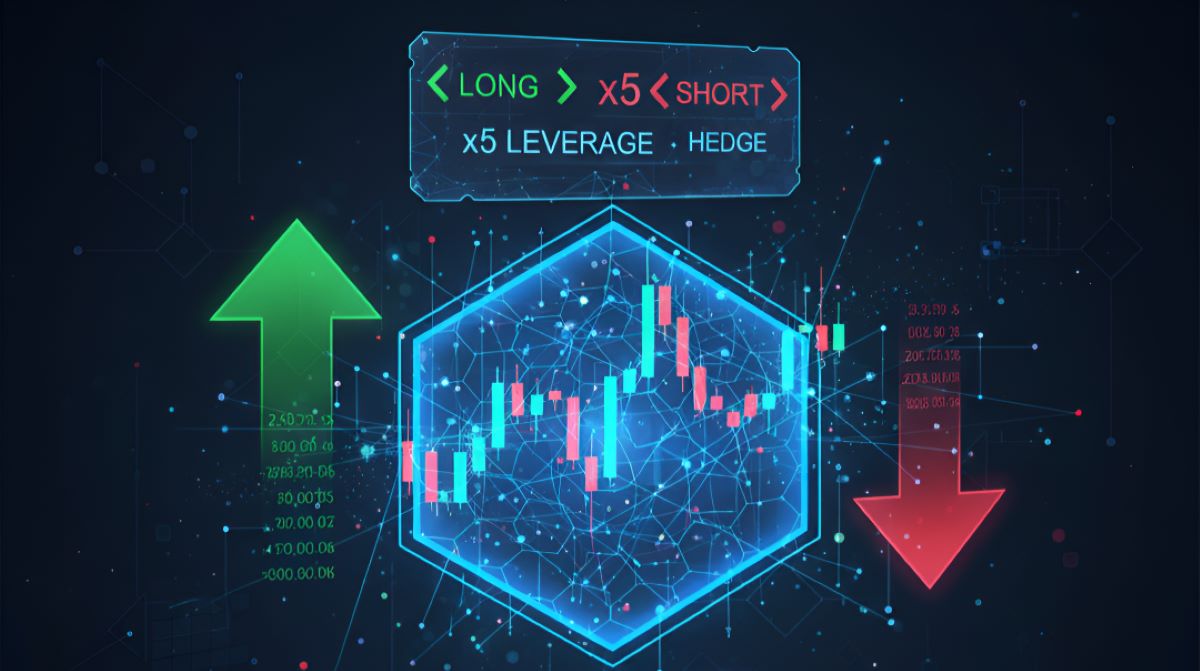
You can predict future price directions and increase your market exposure with leverage. This method is more advanced than simple buy-and-hold strategies.
These derivative instruments offer chances for complex trading strategies. You can hedge, speculate, or manage risks. Contract trading is for professional investors who want more than just holding assets.
Understanding the Basics: Futures, Perpetual Contracts, and Options
There are three main types of contracts in crypto derivatives. Each has its own purpose and risk level. Futures contracts set prices for future dates. You agree to buy or sell at a set price when the contract ends. They have set expiration dates, from weekly to quarterly.
Perpetual contracts never expire and follow spot prices continuously. They use funding rates to keep prices in line with the asset values. Most trading happens through perpetuals because of their flexibility. Options contracts give you the right to buy or sell at specific prices. You pay a premium for this flexibility. Options help limit downside risk while keeping upside possibilities open.
With crypto derivatives accounting for a large portion of trading activity, understanding futures, perpetual contracts, and options has never been more crucial. CoinGecko’s Derivatives Dashboard shows that derivatives trading dominates daily crypto volumes across major exchanges, underlining the relevance of these instruments for both beginners and professional traders (CoinGecko Derivatives Dashboard).
| Contract Type | Expiration | Key Feature | Best For |
| Futures | Fixed dates | Price certainty | Hedging specific timeframes |
| Perpetuals | Never expires | Continuous trading | Active speculation |
| Options | Flexible | Limited risk | Strategic positioning |
How Contract Trading Differs from Spot Trading
Spot trading means buying and owning actual cryptocurrency. You buy Bitcoin or Ethereum directly and keep it in your wallet. Your profits depend on price increases, and you can only profit when prices go up.
Contract trading is different. You don’t own the cryptocurrency. Instead, you bet on price movements through derivative contracts. This way, you can profit from both rising and falling markets.
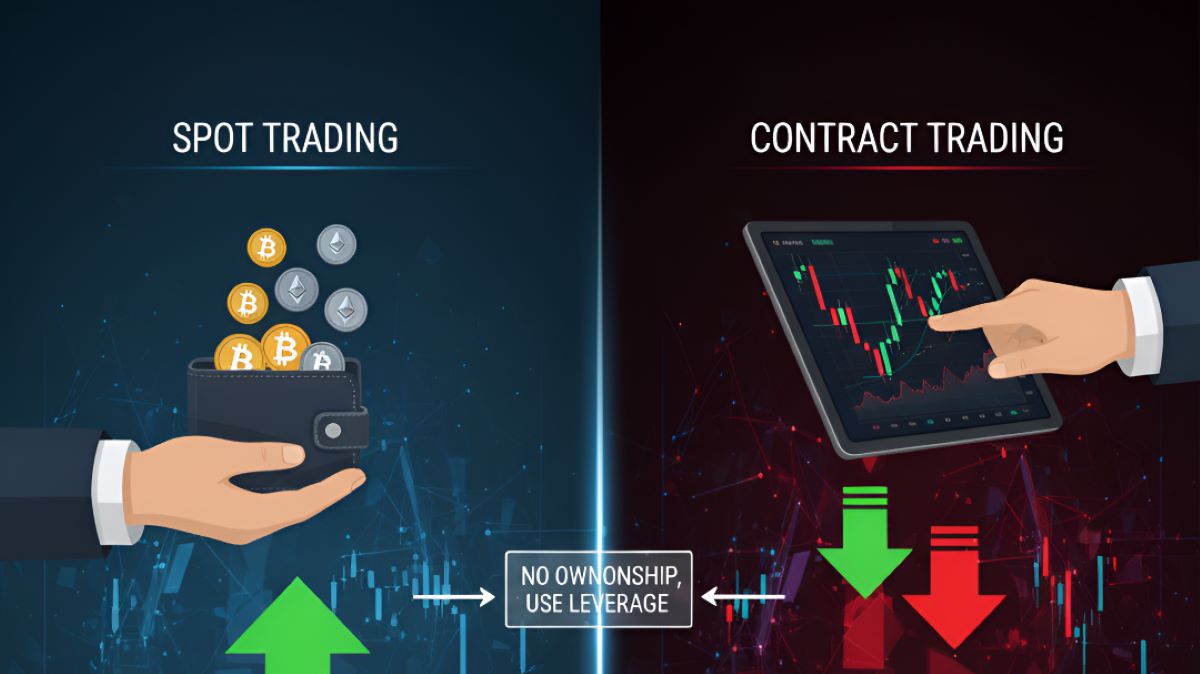
Leverage is another big difference. Spot trading requires full payment for your position. Contract trading lets you control large positions with small capital through margin. For example, you might control $10,000 worth of Bitcoin with only $1,000 in margin.
Settlement processes also vary. Spot trades result in actual cryptocurrency transfers to your wallet. Most crypto contracts settle in cash or stablecoins, so you get profit or loss payments instead of the assets.
Risk profiles differ a lot between these approaches. Spot trading limits your loss to your initial investment. Contract trading with leverage can lead to losses greater than your initial capital, making risk management key to success.
Top Crypto Contract Trading Platforms in 2026
Crypto contract trading platforms today offer a wide range of services. Some focus on privacy and high leverage, while others provide a wide range of assets and advanced features. Each platform caters to different trader needs and strategies. In fact, crypto derivatives now account for over 70% of total trading volume, demonstrating why these platforms have become central to modern cryptocurrency investing (CoinMarketCap Derivatives Market Report 2026).
The top platforms have competitive fees, strong security, and easy-to-use interfaces. These are widely regarded as some of the best crypto trading platforms for both beginners and professional traders.
They offer various contract types and tools for managing risk. Your choice depends on your trading style, experience, and specific needs.
1. CoinFutures – Anonymous High-Leverage Crypto Contract Trading Platform
CoinFutures is the best crypto contract trading platform for traders who value privacy and extreme leverage. Rather than holding crypto, users speculate on price movements for BTC, ETH, DOGE, TRX, and LTC. No KYC is required for small positions, enabling instant anonymous trading.
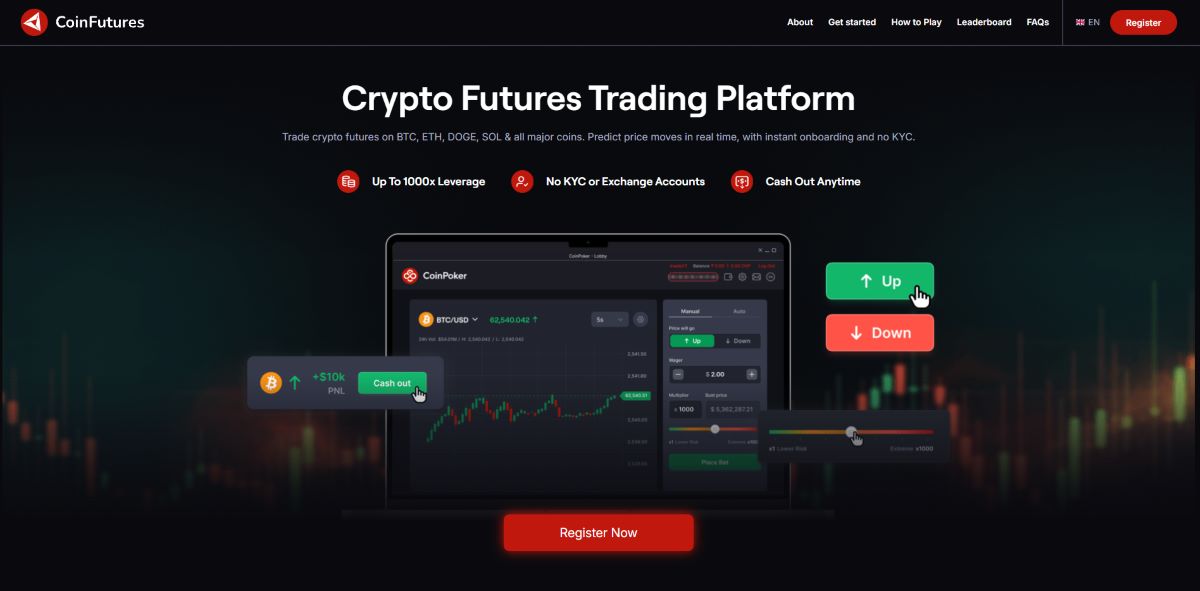
Leverage reaches up to 1000x, with flexible fees through a PnL-based system or flat rates. Stop-loss and take-profit orders help manage risk effectively. The platform is clean, responsive, and available on Windows, Mac, and Android, with iOS coming soon. It is ideal for aggressive traders seeking anonymity while using a professional-grade crypto trading platform.
- No KYC needed for smaller positions (privacy-friendly)
- Up to 1000x leverage for high-intensity strategies
- PnL-based fee model or standard fee option
- Ultra-fast execution with low latency
- Clean, lightweight platform (Windows, Mac, Android)
- Limited number of tradable pairs (11)
- High leverage carries significant liquidation risk
- No iOS app yet (coming soon)
2. Binance – Comprehensive Crypto Futures and Contract Trading Platform
Binance is a top crypto futures and one of the best crypto futures trading platform options, offering 530+ pairs across major cryptocurrencies and altcoins. Traders can use cross-margin or isolated margin modes and access up to 125x leverage. Stablecoin-settled and crypto-settled futures provide flexibility for different trading strategies.
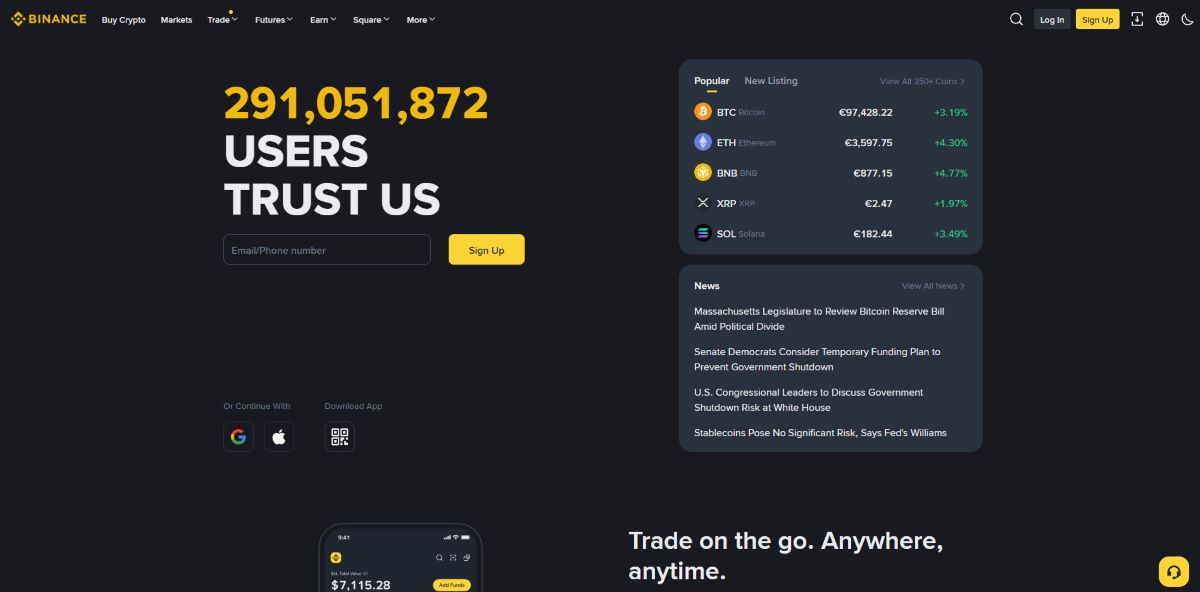
Security is strong, with cold storage, 2FA, and withdrawal locks. Fees are competitive (0.02% maker / 0.04% taker) and can be reduced with BNB. Advanced charting, multiple order types, options trading, and Lite/Pro interface modes make it suitable for both beginners and professionals. High liquidity ensures tight spreads and minimal slippage.
- Largest derivatives liquidity with 530+ futures pairs
- Up to 125x leverage with multiple margin modes
- Advanced charting, order types, and TradingView integration
- Strong security (2FA, cold storage, withdrawal protection)
- Stablecoin- and coin-settled futures for flexible strategies
- Full KYC required for derivatives trading
- Not available for U.S. futures traders
- Complex interface can overwhelm beginners
- Higher fees without BNB balance or VIP discounts
3. MEXC – Low-Fee Crypto Contract and Futures Trading Platform
MEXC is a crypto trading platform focused on low fees and wide market access. It supports over 600 pairs, including many altcoins not available elsewhere, with leverage up to 400x. Maker fees start at 0%, and taker fees at 0.02%, ideal for active traders.
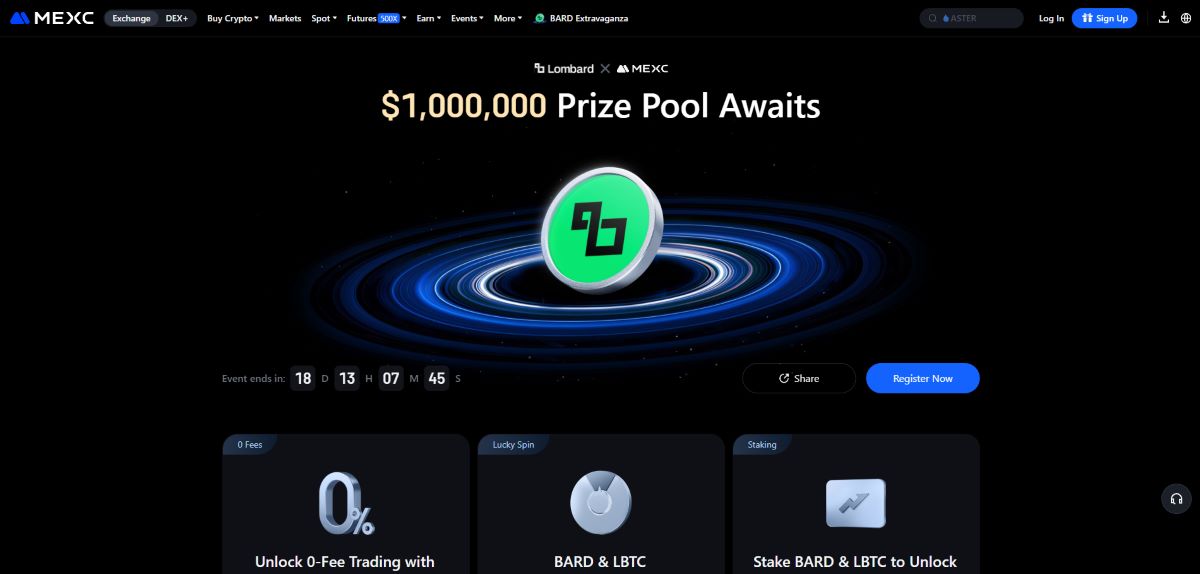
The interface is intuitive, with advanced tools like take-profit, stop-loss, and margin orders. A demo mode allows beginners to practice risk-free. KYC is required for withdrawals, with daily limits based on verification level. MEXC balances affordability, liquidity, and usability, making it suitable for both casual and professional crypto contract and futures traders.
- Over 600–900+ perpetual and futures pairs, including many rare altcoins
- Ultra-low fees (0% maker / 0.02% taker)
- High leverage options up to 400x
- Beginner-friendly interface with detailed guides
- Demo trading mode for risk-free practice
- KYC required for withdrawals and higher limits
- Not available to U.S. futures traders
- High leverage increases liquidation risk
- Interface can feel cluttered during high volatility
4. BloFin – Automated Crypto Derivatives and Trading Platform
BloFin is a crypto derivatives trading platform that prioritizes automation and privacy. Supporting over 500 pairs with up to 150x leverage, it offers AI-powered trading bots that adjust strategies to market conditions. Take-profit and stop-loss tools help manage positions automatically.

No KYC is needed for withdrawals up to $20K, with optional verification for higher limits. Fees are 0.02% maker and 0.06% taker, with VIP reductions available. Fiat and crypto deposits are supported. BloFin is ideal for traders seeking automated solutions with professional-grade risk management while maintaining anonymity.
- Supports 500+ crypto perpetual pairs with up to 150x leverage
- AI-driven trading bots for automated strategy execution
- No KYC required for withdrawals up to $20,000
- Clean interface with smart risk-management tools
- Multiple deposit methods including fiat and crypto
- Higher taker fees (0.06%) compared to some competitors
- Advanced bot features may be overwhelming for beginners
- Not available to U.S. futures traders
- No demo trading mode for practice
5. Margex – Beginner-Friendly Crypto Contract Trading Platform with Incentives
Margex is a beginner-focused crypto contract trading platform. No KYC is required, and users receive a $50 sign-up bonus, plus additional deposit incentives. It supports over 40 contracts with up to 100x leverage.
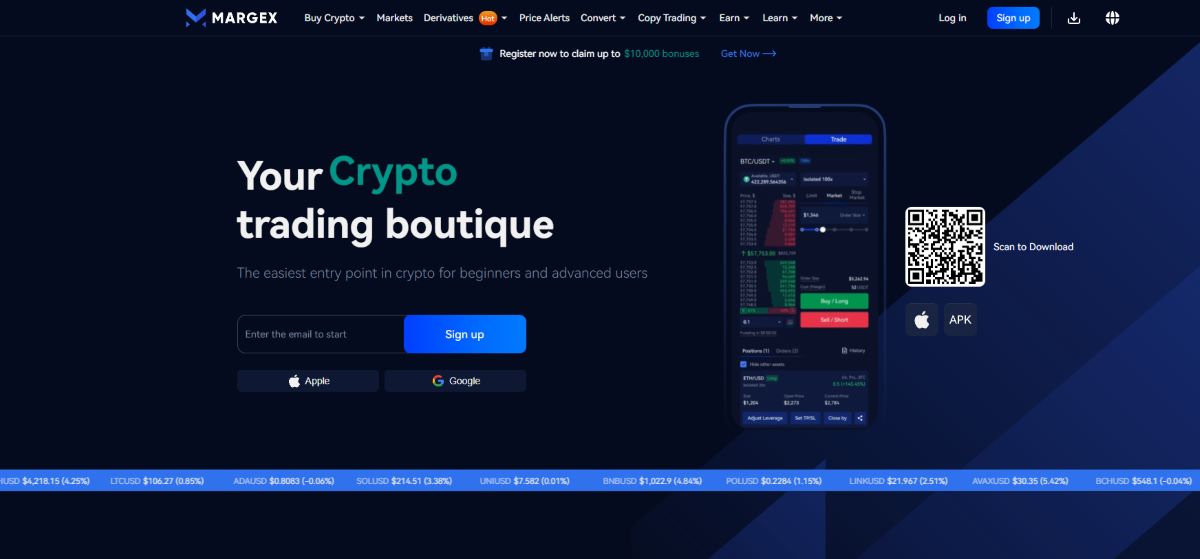
The interface is clean, with central charts and easy-to-access trading tools like stop-loss and limit orders. Mobile apps are available for iOS and Android. While no demo mode exists, tutorials guide new users through trading processes. Fees are 0.019% maker and 0.06% taker. Margex is ideal for beginners seeking simplicity, leverage, and trading rewards.
- No KYC required for trading and basic withdrawals
- Beginner-friendly interface with clear chart layout
- Up to 100x leverage on major crypto contracts
- $50 welcome bonus plus additional deposit incentives
- Strong security with multi-sig wallets and encrypted infrastructure
- Only ~40 tradable contracts — fewer than major exchanges
- No demo trading mode for beginners
- Not suitable for high-volume professional traders
- Limited advanced order types compared to Bybit / Binance
6. PrimeXBT – High-Leverage Crypto Futures and CFD Platform
PrimeXBT is a crypto futures and CFD platform designed for aggressive traders. It offers up to 1000x leverage on 35 crypto pairs, with low fees (0.01% maker / 0.045% taker) and VIP discounts of up to 40% for high-volume users.
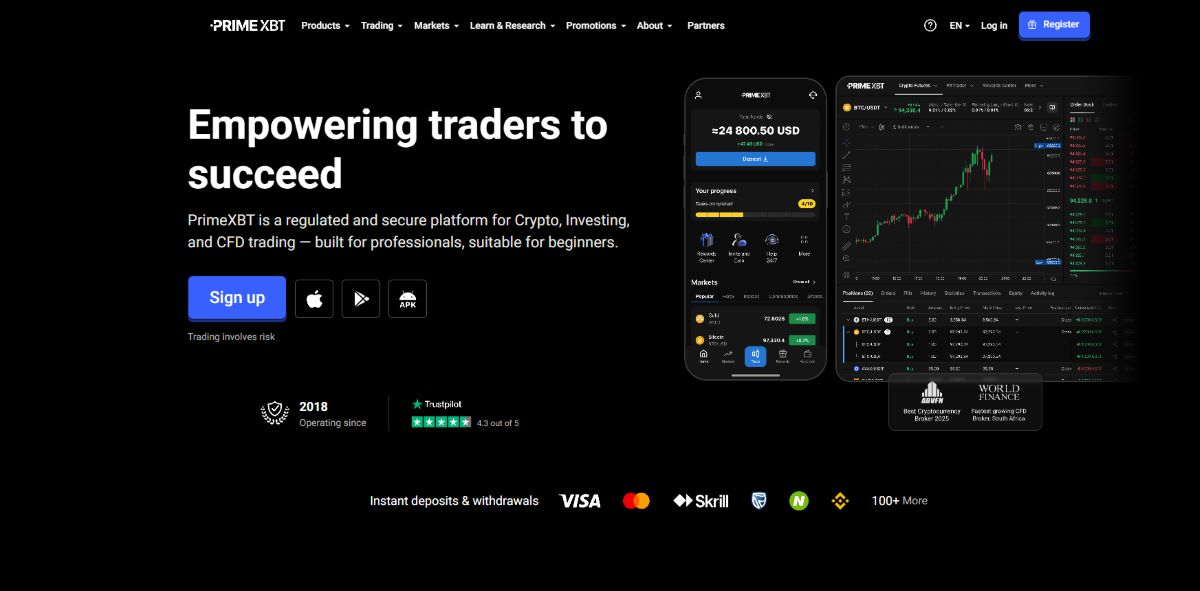
KYC is optional, unlocking higher withdrawal limits and additional deposit methods. The platform offers multiple order types, advanced charting, and an intuitive interface suitable for both beginners and experienced traders. Mobile access is available via iOS, Android, and APK. PrimeXBT combines high leverage, low fees, and professional trading tools, making it ideal for advanced crypto contract trading.
- Extremely high leverage up to 1000x on selected crypto pairs
- Supports both crypto futures and CFD trading for diversified strategies
- Low trading fees (0.01% maker / 0.045% taker) with VIP discounts
- Optional KYC — traders can remain fully anonymous
- Available on iOS, Android, desktop and custom APK builds
- Only ~35 crypto pairs available for trading
- High leverage significantly increases liquidation risk
- CFDs may be confusing for beginners
- Not accessible for U.S. traders
7. Bybit – Advanced Crypto Trading Platform with Smart Tools
Bybit is a crypto trading platform with over 718 contracts and leverage ranging from 25x to 125x depending on the asset. It is also widely used for contract trading crypto. Users can trade without KYC, with daily withdrawals capped at 20,000 USDT until verification is completed.
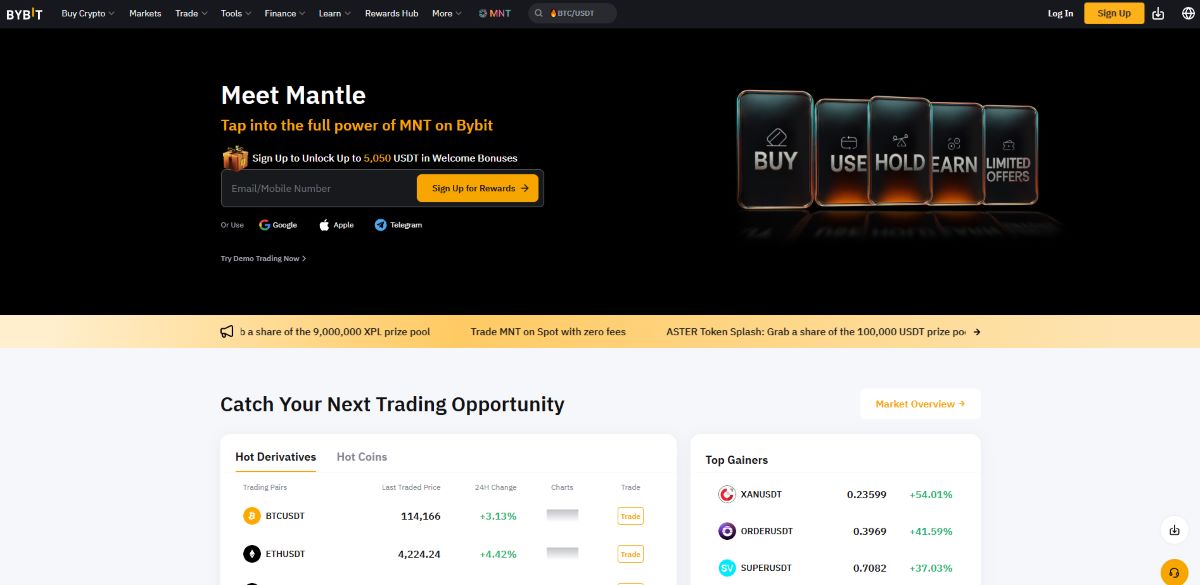
Advanced features include TradeGPT, PnL simulators, TradingView integration, and a demo trading mode for beginners. Onboarding guides and flexible order types support efficient risk management. Mobile apps are fully functional, though the interface may feel dense on smaller devices. Bybit’s extensive contract selection and professional tools make it suitable for casual and advanced crypto contract traders alike, especially those interested in contract trading crypto.
- Massive selection of 700+ perpetual and futures contracts
- Advanced trading tools including TradeGPT, PnL simulator & TradingView charts
- Up to 125x leverage on major crypto pairs
- No KYC required for basic trading (20,000 USDT daily withdrawal limit)
- Full-featured mobile apps for iOS and Android
- Beginners may find the interface complex due to many features
- Not available to U.S. futures traders
- High leverage increases liquidation risk
- Occasional overload during extreme volatility periods
8. KCEX – Licensed, Low-Fee Crypto Futures and Contract Trading Platform
KCEX is a licensed crypto futures and contract trading platform offering over 800 trading pairs. Fees are extremely low: 0% maker and 0.01% taker. A Futures Trading Guide helps beginners understand charts, order execution, and position management.
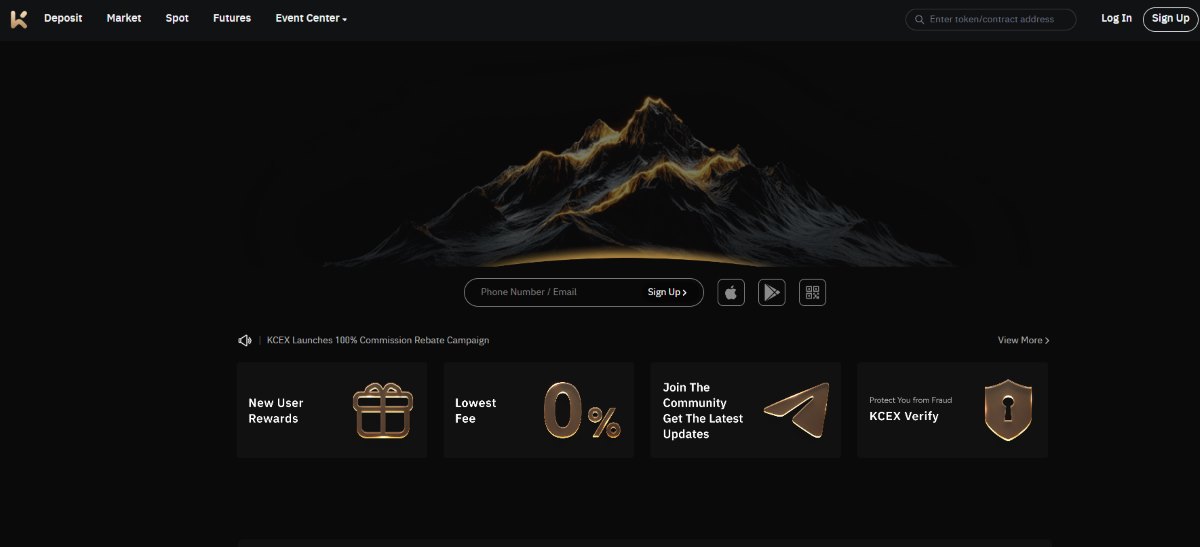
KYC with biometric verification ensures security, while iOS and Android apps allow trading on the go. Though it lacks a demo mode, the platform is intuitive and beginner-friendly. KCEX’s combination of low fees, regulatory compliance, and broad asset selection makes it ideal for traders seeking a secure and cost-effective crypto trading platform.
- Licensed exchange operating in multiple regulated jurisdictions
- Extremely low fees (0% maker / 0.01% taker)
- Over 800 crypto futures and perpetual trading pairs
- Strong security with biometric KYC and strict verification layers
- Beginner-friendly Futures Trading Guide for new traders
- No demo trading mode for practice
- Full KYC required for all features
- Not available to U.S. futures traders
- Interface is simpler — fewer advanced tools compared to Bybit/Binance
Types of Crypto Contracts Explained
When you explore crypto contract trading platforms, knowing the different contract types is key. Each type has its own benefits and fits various trading strategies. Major exchanges offer a range of derivatives to match your risk level and investment time frame.
The main contract types are futures, perpetual contracts, and options. These allow you to trade cryptocurrency without owning it. Each type has its own rules and settlement ways.
| Contract Type | Expiration | Funding Mechanism | Best For | Available Platforms |
| Futures Contracts | Fixed expiry date | No funding fees | Specific time predictions | Coinfutures.io Binance, MEXC, Bybit |
| Perpetual Contracts | No expiration | 8-hour funding rates | Long-term positions | Bybit, MEXC, Binance |
| Options Contracts | Weekly/Monthly | Premium payments | Risk-limited strategies | Binance, Deribit |
Futures Contracts: Predicting Future Prices
Futures contracts are standardized agreements that obligate traders to buy or sell a cryptocurrency at a predetermined price on a specified future date. This structure mirrors traditional commodity futures used in markets regulated by institutions such as CME Group. In the crypto ecosystem, futures enable traders to speculate on price movements without actually holding the underlying asset, which can help them hedge risk and navigate market volatility.
Major exchanges like Coinfutures.io, Binance, and Bybit offer different types of futures products. For instance, Binance provides USDⓈ-M Futures, which are settled in stablecoins such as USDT or USDC, and COIN-M Futures, which are settled directly in cryptocurrency. USDⓈ-M contracts make it easier to track profits and losses since settlements remain in stablecoin value, while COIN-M futures allow traders to gain direct exposure to the price performance of the underlying crypto asset.
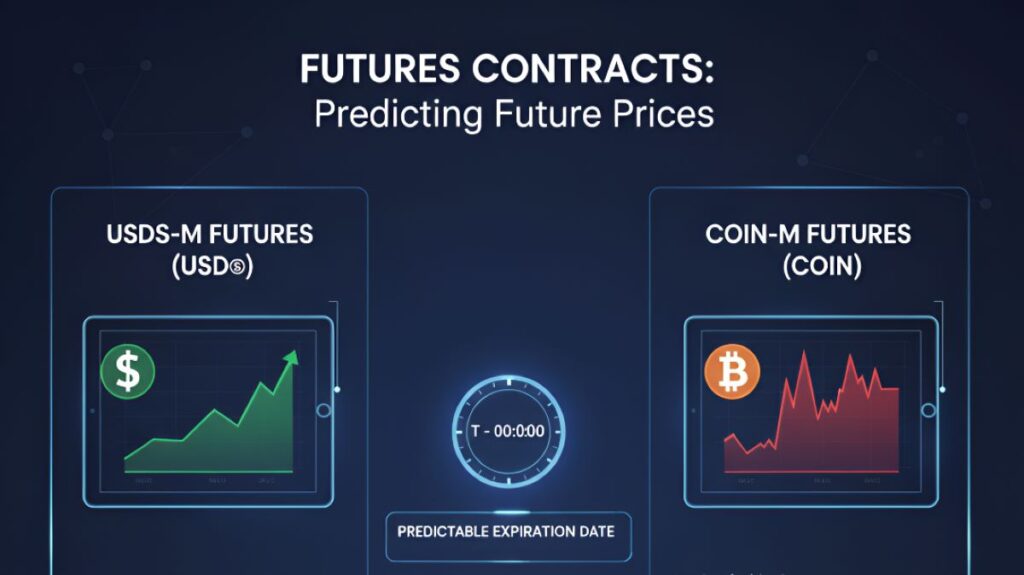
A key advantage of futures is their fixed expiration, which provides structured timelines ideal for event-driven and seasonal strategies. According to CoinGlass, Bitcoin and Ethereum quarterly futures remain among the most actively traded derivatives in the crypto market, particularly around expiration cycles.
Futures settlements are based on an index or average price during the final trading period to prevent manipulation, as outlined in Binance’s Futures Settlement Guide. Most leading platforms — including Binance, MEXC, and KCEX — offer weekly, biweekly, and quarterly contract expirations.
Key Benefits of Crypto Contract Trading
Contract trading platforms offer powerful tools that change how you trade cryptocurrencies. They provide opportunities that spot trading can’t. The best platforms have advanced features and easy-to-use interfaces to help you trade better.
Contract trading lets you profit in both rising and falling markets. You can use leverage to increase your market exposure. Tools for managing risk help protect your investments in unstable markets.
Profit Opportunities in Rising and Falling Markets
Contract trading lets you profit from both rising and falling prices. You can take long positions when prices are expected to go up. Short positions help you profit when prices fall.
This flexibility is key during bear markets or corrections. While spot traders might lose money, contract traders can make profits. You can short Bitcoin, Ethereum, or other supported cryptocurrencies.
Being able to trade in both directions means you’re always active. Volatility becomes a chance to make money. Professional traders use this to stay consistent in different market conditions.
Leverage: Amplifying Market Exposure
Leverage lets you control larger positions with less capital. Platforms offer different leverage ratios for different trading styles. Binance offers up to 125x leverage, while BTCC offers up to 500x.
Leverage can greatly increase your returns. For example, a $1,000 position with 10x leverage controls $10,000. A 5% price increase means a $500 profit instead of $50. This is a 50% return on your initial investment.
But leverage also increases losses. A 5% price drop would result in a $500 loss. This shows why managing your positions and risks is so important.
| Platform | Maximum Leverage | Risk Management Tools | Liquidation Protection |
| Binance | 125x | Stop-loss, Take-profit, Trailing stops | Insurance fund, Partial liquidation |
| MEXC | 400x | Advanced order types, Risk alerts | Auto-deleveraging system |
| CoinFutures | 1000x | Position limits, Stop-loss/Take-profit, Margin monitoring | Liquidation engine optimization |
| BloFin | 150x | Automated risk controls, Smart alerts, Stop-loss/Take-profit | Dynamic margin requirements |
| Margex | 100x | Stop-loss, Limit orders | Funding rate adjustments |
| PrimeXBT | 1000x | Stop-loss, Take-profit, Advanced order types | Auto-deleveraging, Margin monitoring |
| Bybit | 125x | TradeGPT, PnL simulators, Stop-loss/Take-profit | Partial liquidation, Dynamic margin |
| KCEX | 100x | Stop-loss, Take-profit, Futures Trading Guide | KYC & verification-based limits |
Hedging and Risk Management Tools
Contract trading offers advanced hedging strategies to protect your crypto. You can open short positions to offset losses in your spot portfolio. This reduces risk during market downturns.
Cross-hedging protects one crypto by taking positions in related assets. For example, you might hedge Ethereum by shorting Bitcoin contracts. This keeps your portfolio stable.
Tools like stop-loss orders and take-profit orders help manage risks. Position sizing calculators help determine the right trade sizes for your risk tolerance. Many platforms also offer liquidation protection and insurance funds for extra safety.
Risks to Consider in Contract Trading Crypto
Crypto contract trading comes with big risks. These risks can quickly turn a good trade into a big loss. It’s important to manage these risks to succeed in the long run, especially if you’re involved in contract trading crypto.
Exchanges have systems to protect traders and themselves. They use things like adjustable collateral and insurance funds. But, these don’t get rid of the risks of trading with a lot of leverage.
Liquidation Risk and Margin Calls
Liquidation happens when your trade loses too much value. The exchange then closes your position to stop further losses. This can happen fast and wipe out your entire trade.
Margin requirements change based on how you set up your trades. Isolated margin limits your risk to the amount you put in. Cross margin uses all your money, which can save your trade but risks losing everything.
Platforms use mark prices to decide when to liquidate. This helps avoid unfair liquidations. But, during big market swings, the difference between mark and last traded prices can grow, leading to unexpected liquidations.
To avoid liquidation, keep more margin and set stop-loss orders early. Many traders exit their trades before they hit liquidation levels. This way, they avoid big losses.
Smart Contract Vulnerabilities
Decentralized trading platforms use smart contracts. These contracts can have bugs that hackers exploit. Unlike regular exchanges, fixing these bugs is hard.
There have been cases where hackers used oracle price manipulation for big liquidations. Some platforms have lost millions because of these hacks. It’s key to check a platform’s security before trading.
Look into a platform’s security audits before trading. Choose platforms with good security records. Remember, more security means less decentralization.
Insurance and emergency plans vary among platforms. Some have big funds for failures, while others offer little protection. Knowing these plans helps you understand the risks.
Market Volatility and Leverage Management
Crypto markets can swing wildly, and leverage makes these swings even bigger. A small price drop can lead to big losses. Regulatory bodies, such as the UK FCA, impose limits on leverage for retail clients trading CFDs and crypto derivatives to protect investors from excessive risk. Traders often monitor volatility indices like the BitMEX BVOL Index to gauge market risk, as high BVOL readings signal periods of extreme price movement and potential liquidation events.
Big price swings can lead to a chain of liquidations. This can push prices down even more, causing bigger losses. Volatility is often higher on weekends and holidays because of less trading.
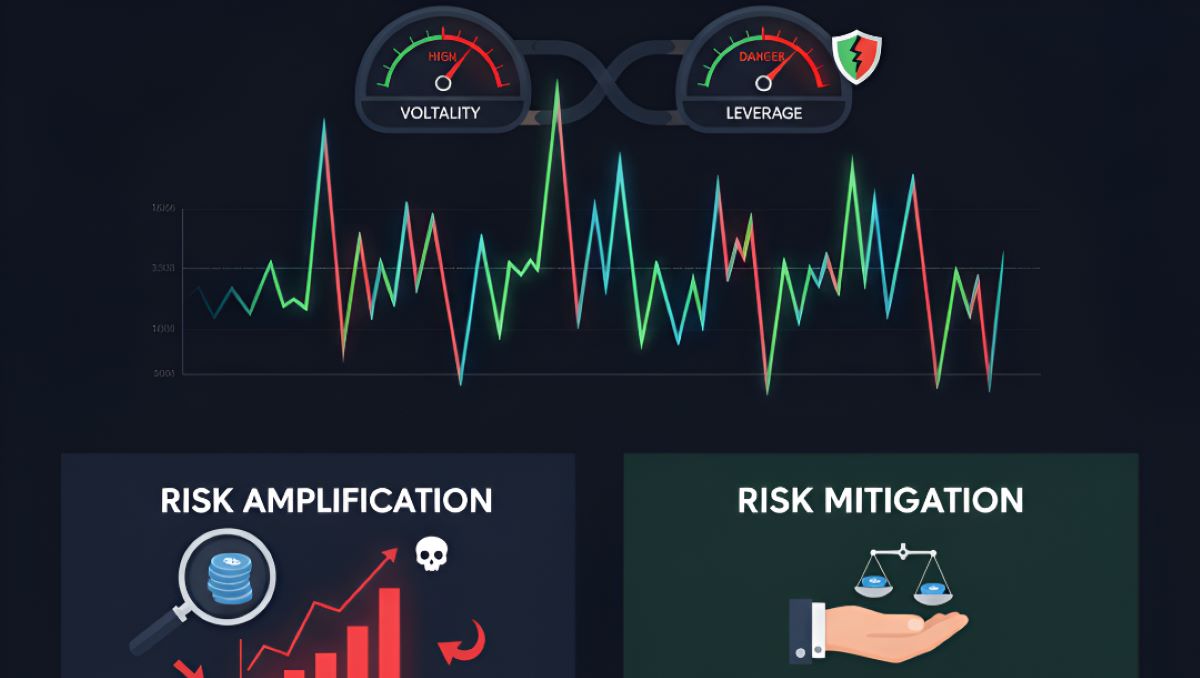
To manage leverage, adjust your position sizes based on market conditions. In volatile times, use less leverage or avoid trading. Experienced traders use indicators to decide how much leverage to use.
It’s important to size your positions carefully. Never risk more than you can afford to lose. A good rule is to risk no more than 1-2% of your capital per trade. This helps you stay safe during losing streaks.
Stop-loss orders help protect your trades, but they’re not perfect. Slippage can make your exit price different from what you planned. Consider using smaller positions to spread out your risk.
How We Evaluate Crypto Contract Platforms
We use a detailed method to check crypto contract trading platforms. This ensures our advice is fair and helpful. We look at many factors that affect your trading success.
Our evaluation focuses on four key areas. This helps us see what each platform does well and what it could improve. We score each platform based on how well it meets different trading needs.
Security and Reliability
Security is our top priority. We check if platforms use cold wallets to keep your money safe offline. Good platforms keep at least 95% of user funds in cold storage, a practice highlighted in the Chainalysis Crypto Crime Report
as essential for reducing losses from hacks and theft.

Two-factor authentication is a must for any platform we recommend. We also look for extra security features like multi-signature wallets. These add an extra layer of protection.
Proof of reserves audits show a platform’s honesty and financial health. We look for platforms that share these reports regularly. Insurance adds another layer of safety, protecting against security issues.
How well a platform works during market ups and downs shows its reliability. We watch how platforms handle high trading volumes. Reliable performance during these times shows strong infrastructure.
Trading Fees and Costs
We don’t just look at maker-taker fees. We also consider funding rates for perpetual contracts. These rates can greatly affect your profits.
Withdrawal fees vary a lot, from free to several dollars per transaction. We include these costs in our overall fee review. Hidden fees like conversion charges also affect our rankings.
Trading fees range from 0% to 0.6% across platforms. But, volume-based discounts can lower these costs. We compare fees for both casual and professional traders.
Funding rates for perpetual contracts change every eight hours. Platforms with better funding rate calculations get higher scores in our fee review.
Leverage Options and Risk Management Tools
Maximum leverage ratios are just part of what a platform offers. We look at margin requirements and how they change in volatile markets. Some platforms raise margin requirements when markets get more unstable.
Liquidation mechanisms differ a lot between platforms. We test how platforms handle liquidations and if they offer partial liquidations. These features can help save more of your capital during bad market moves.
Features like automatic stop-loss orders and take-profit levels are key. We check how reliable and fast these measures are. Advanced platforms offer more options like trailing stops and conditional orders.
Portfolio margin systems help experienced traders use their capital more efficiently. We see which platforms offer these advanced margin methods. Cross-margin and isolated margin options offer different levels of risk.
Platform Usability and Features
The design of the platform’s interface is very important. We test both web and mobile apps on different devices. A clean, easy-to-use design helps you make quick trades during market opportunities.
How fast a platform executes orders is critical in volatile markets. We measure how quickly it handles market and limit orders. We also look at slippage rates during high-volume times.
Customer support quality varies a lot among platforms. We test how fast and effective support is across different channels. Live chat and support in multiple languages improve the user experience.
Educational resources are vital for new traders. We check the quality and range of tutorials, guides, and market analysis tools. Good charting tools and technical indicators help with informed trading decisions.
API functionality is important for automated trading and third-party integrations. We assess API reliability, documentation, and rate limits. These features are key for professional and algorithmic traders.
Practical Tips for Trading Crypto Contracts
To make money from crypto contracts, you need a good plan and to manage risks well. By selecting one of the best crypto trading platforms, you can take advantage of reliable risk management tools and professional-grade trading features. The platforms we’ve looked at have great tools for trading contracts. But, success comes from how well you use these tools. Here, we’ll give you tips to help you start trading and build good habits — and choosing the best crypto trading platform can give you a strong foundation for long-term success.

These tips work for all major platforms, whether you’re starting with CoinFutures or using Binance’s features. You’ll learn to trade confidently and keep your money safe from common mistakes.
Step-by-Step Guide to Start Trading
Your journey in contract trading starts with setting up your account and verifying it. Most platforms ask for email verification. Some, like Binance, need full KYC documents. CoinFutures and BloFin let you trade anonymously, which is great for those who value privacy.
Start with a small amount you can afford to lose. Never risk more than 5% of your total investment portfolio on contract trading at first. This cautious approach helps you learn without losing too much money.
Go to the futures or derivatives section of your chosen platform. Get familiar with the interface before you place any trades. Look for these key elements:
- Order book showing current buy and sell orders
- Price chart with technical indicators
- Position management panel
- Margin and leverage controls
- Order history and trade logs
Place your first trade with a small position size. Pick a major cryptocurrency pair like BTC/USDT for better liquidity. Start with 2x leverage to understand how contract trading works without too much risk.
Using Leverage Responsibly
Leverage makes both profits and losses bigger in contract trading. The 1-2% risk rule is a good starting point for position sizing. This means risking only 1-2% of your account balance on any single trade.

Calculate your position size using this formula: Position Size = (Account Balance × Risk Percentage) ÷ Stop Loss Distance. For example, with a $1,000 account and 2% risk, you can risk $20 per trade.
Different leverage ratios suit different trading styles:
| Leverage Ratio | Risk Level | Best For | Liquidation Distance |
| 2x-5x | Low | Beginners | Far from entry |
| 10x-20x | Medium | Experienced traders | Moderate distance |
| 50x-100x | High | Expert scalpers | Very close to entry |
| 125x+ | Extreme | Professional traders | Immediate liquidation risk |
Gradually increase leverage as your skills improve. Many successful traders never go above 10x leverage. They prefer steady profits over high-risk bets.
Implementing Stop-Loss and Take-Profit Orders
Stop-loss orders protect your money by closing losing positions automatically. Set your stop-loss before entering any trade, not after the market moves against you. This disciplined approach helps avoid emotional decisions during volatile times.
Use technical analysis to find the best stop-loss levels. Place stops below support levels for long positions and above resistance levels for short positions. This way, you give your trades room to move while keeping risks under control — a key practice in cryptocurrency contract trading.
Take-profit orders lock in gains automatically. Use a risk-reward ratio of at least 1:2, meaning your profit should be twice your loss. This ratio helps you make money even with a 50% win rate.
Most platforms offer these essential order types:
- Market orders for immediate execution
- Limit orders for specific price targets
- Stop-market orders for risk management
- OCO (One-Cancels-Other) orders for advanced strategies
- Trailing stops that adjust with favorable price movements
Practice using different order types on demo accounts before risking real money. Knowing how orders work helps you react quickly to market chances.
Automation with Trading Bots and Smart Contracts
Trading bots can run your strategies 24/7 without emotional influence. Platforms like MEXC and Binance have built-in bot features, including futures grid trading and copy trading systems.
Grid trading bots are good for ranging markets. They place multiple orders at set intervals, making money from price swings. Use grid bots in sideways markets for steady small profits.
Copy trading lets you follow successful traders’ moves automatically. Research traders’ past performance, risk management, and trading frequency before copying them. Look for consistent performers, not those with short-term gains.

Smart contract integration offers advanced automation. Some platforms let you create custom trading rules using blockchain-based contracts. These contracts execute trades based on set conditions without human help.
Keep an eye on your automated systems. Bots can fail or perform poorly in changing markets. Set max loss limits and check performance weekly to keep your automation strategies profitable.
Start simple with automation before trying complex strategies. Many traders find success with basic stop-loss automation and then add more features as they get better.
Frequently Asked Questions (FAQ)
New traders often have specific questions about crypto contract trading before starting their journey. These answers address the most common concerns based on real market experience.
What is a contract in crypto trading?
In crypto trading, a contract is a binding agreement to buy or sell a cryptocurrency at a predetermined price. Instead of owning the actual asset, you’re speculating on its future price movement. The most common type is a perpetual contract, which has no expiration date.
How risky is crypto contract trading?
Risk levels depend on how much leverage you use and your risk management. Trading with 10x leverage means both gains and losses are ten times bigger. Platforms like CoinFutures offer up to 100x leverage, which increases the risk of losing your money. Using stop-loss orders and managing your position size can help reduce these risks.
Can you make consistent profits with contract trading?
Consistent profits require skill, discipline, and good risk management. Most successful traders spend months learning about market analysis and developing strategies. Success depends on education, practice, and controlling your emotions, not luck.
How much is 1 contract worth?
Contract values vary by platform and the type of instrument. Bitcoin futures on major exchanges usually represent 0.001 BTC per contract. Ethereum contracts often equal 0.01 ETH. Always check your chosen platform’s details before trading to know the value of your positions.
References
- Global Crypto Derivatives Market Data — volume, open interest, funding rates (CoinGecko)
- Crypto Derivatives Exchange Rankings & Market Statistics (CoinMarketCap)
- Quarterly Crypto Futures & Market Structure Report (Binance Research)
- Funding Rates, Liquidations & OI Analysis Across Exchanges (CoinGlass)
- Institutional Crypto Futures Outlook & Regulatory Coverage (Reuters)